
Environment
India’s draft on REDD+ safeguards needs
a relook
·
India has released a draft document on
Safeguards Information System to reduce potential risks from the implementation
of activities under the UN’s Reducing Emissions from Deforestation and
Degradation program (REDD+), a key climate change mitigation tool.
·
The draft document is in compliance with
India’s commitment to United Nations Framework Convention on Climate Change.
·
Experts note the safeguard relies on
forest and land use rules, legislation and guidelines that dont have an
amazing tune report of making sure environmental justice and addressing
biodiversity loss.
·
A more robust framework to evaluate
compliance is needed.
·
The REDD+ framework created by the
United Nations Framework Convention on Climate Change (UNFCCC) Conference of
the Parties (COP), is geared towards the sustainable management of forests and
the Conservation and enhancement of woodland carbon shares in growing
international locations.
·
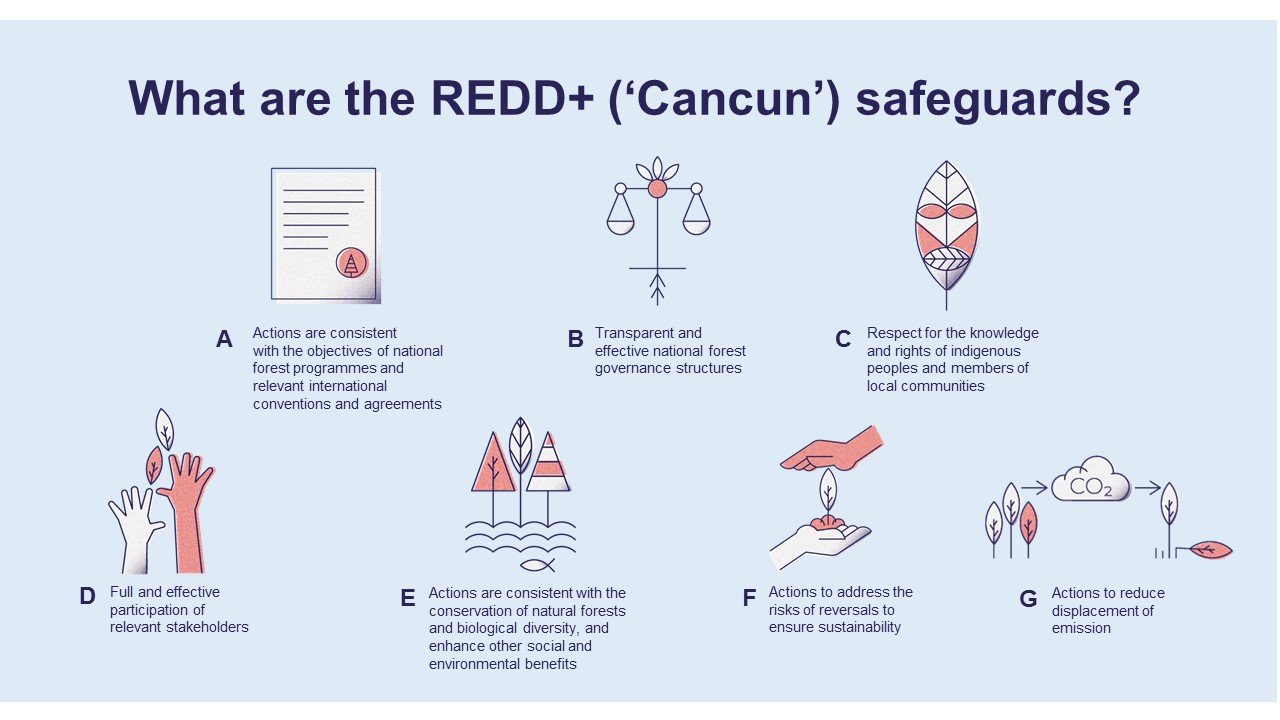
The seven safeguards (called Cancun
safeguards) articulated as in keeping with the Cancun Agreements at Cancun,
Mexico, at the 2010 United Nations Climate Change Conference, want to be
addressed and respectedthe implementation of REDD+ activities to prevent any
negative impacts of REDD+ actions on natural forests, biological diversity and
local communities.
·
As in line with the agreements,
developing united states Parties to the UNFCCC which includes India, are
required to create a Safeguards Information System (SIS) to record on
compliance to the safeguardswhile implementing REDD+ activities.
·
The National REDD+ Strategy of India
endorses the adherence to Cancun safeguards during the implementation of REDD+
activities, states the draft document.
·
The Strategy additionally ties in with
India’s Nationally Determined Contribution to create an additional carbon sink
of 2.Five to a few billion tonnes of CO2 equivalent via additional wooded area
andtree cover by 2030.
What
is REDD+?
·
Reducing Emissions from Deforestation
and forest Degradation (REDD+) is a mechanism developed by Parties to the
United Nations Framework Convention on Climate Change (UNFCCC) in 2005.
·
Most of the key REDD+ decisions were
completed by 2013, with the final pieces of the rulebook finished in 2015.
·
The “Plus” in REDD+, lays out the
various ways in which countries have defined the three activities:
conservation, the sustainable management of forests and enhancement of forest
carbon stock.
·
It pursuits to achieve climate alternate
mitigation by using incentivizing woodland conservation.
·
It has three phases — Readiness,
Implementation and Result-based actions. Readiness phase involves the
development of national strategies or action plans, REDD+ mitigation actions,
and capacity building. Implementation is about enacting REDD+ actions and
national strategies that could involve further capacity building, technology
development and transfer.
·
Results-based payments comprise the
final REDD+ phase.
·
It affords financial incentives to
growing countries that prove they stopped deforestation during a positive time
frame.
·
This is done through rigorous UN-backed
technical evaluations
·
The Green Climate Fund (GCF) established
at Conference Of Parties (COP)-17 to function as the financial mechanism for
the UNFCCC, is currently financing REDD+ programs.
·
Brazil was the primary U.S. To get hold
of $ninety six.5 million underneath the resultsbased bills.
Comments