
Ancient History
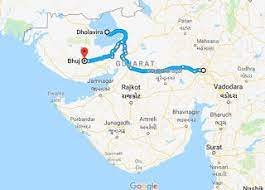
Recently, UN agency has declared the Harappan town of Dholavira in Gujarat as
India’s forty world
heritage website. its the primary website of
Indus natural depression Civilisation
(IVC) in India to
be enclosed on
the UN agency list.
About
Dholavira:
·
It was discovered in
1968 by archaeologist Jagat Pati Joshi.
·
It is one of the most
remarkable and well-preserved urban settlements in South Asia.
·
The ancient city of
Dholavira is an archaeological site at Kachchh District, in the state of
Gujarat, which dates from the 3 to mid-2 millennium BCE.
·
It is located on Khadir
Bet Island in the Kachchh Desert Wildlife Sanctuaryin the Great Rann of
Kachchh. Dholavira’s location is on the Tropic
of Cancer.
·
Unlike other Harappan
antecedent towns normally located near to rivers and
perennial sources of water, the
placement of Dholavira within
the island of Khadir bet.
·
This expedited internal in addition as external trade to
the Magan (modern Sultanate of
Oman peninsula) and Mesopotamian regions.
·
After
Mohen-jo-Daro, Harappa,Rakhigarhi, Ganweriwala, Dholavira is that the fifth largest
metropolis of the Indus vale Civilization
(IVC).
·
The website contains a walled town, a castle, a ceremonial ground
(cemetery), 2 seasonal streams and homes of various classes indicating
a social hierarchy.
·
The 3 stage settlement in Dholavira
(citadel- middle city &
lower town) was designed for
various classes of
residents and functions.
·
There
was a castle for a vital person, whereas the center city housed wealthy merchants and
generals and also the lower city was for the folk.
·
A
series of reservoirs square
measure found to the east and south of the stronghold. Dholavira consists
of associate economical water management
system with a cascading system of reservoirs.
Archeological
Findings:
·
Artifacts that were
found here include terracotta pottery, beads, gold and copper ornaments, seals,
fish hooks, animal figurines, tools, urns, and some imported vessels.
·
Remains of a copper
smelter indicate Harappans, who lived in Dholavira, knew metallurgy.
·
It
was conjointly a
hub of producing jewelry product of shells and semi-precious stones, like chalcedony and wont to export timber. not like graves at different IVC sites, no mortal
remains of humans are discovered
at Dholavira.
·
Nine
gates with distinctive styles together with a north gate that had a signboard, a primary of its kind found at
Harappan web site.
·
Funerary design that includes mound — subfigure structures just like the Buddhist Stupas.
·
Decline
of Dholavira: Dholavira entered a part of
severe aridity because of global climate change and rivers
like Saraswati desiccation.
·
Due
to a drought-like state of affairs, folks started migrating towards
the Ganges River depression or towards south
Gujarat and more on the far side in geographic region.
Comments